






Keeping CIOB’s Building Safety Act Workshop aligned with legislative and regulatory change

A raft of changes to the England’s building safety regime are expected to be implemented in 2026. This started in January as the Building Safety Regulator became a standalone body, overseen by the Ministry of Housing, Communities and Local Government (MHCLG), moving from its previous management by the Health and Safety Executive. This represents a major accountability shift in the regulatory structure.
It is expected that, in October 2026, the Building Safety Levy will come into effect, which will be a financial charge to developers of most new residential developments that need building control approval. This flow of funding, along with the evolving details of the Building Safety Act 2022, will be key considerations for anyone involved in building projects in 2026. However, it is worth noting that the application of the Building Safety Levy has been delayed multiple times in the past, so while we expect it to come into force in October 2026, this could be pushed back.
Further changes are expected through 2026, including fundamental changes to the regulation of construction products. The UK Government has recently published its Construction Product Reform White Paper, detailing their objectives for future product regulation.
It is worth noting that many of these recent and proposed future changes to the building safety regime only apply in England, such as the application of the Building Safety Levy.
Supporting learning with our Building Safety Workshop
With such foundational changes being enforced, construction managers and those in adjacent roles need to be completely up to date with the newest rules and regulations that make up the legislation.
This is the role of CIOB’s Building Safety Act Workshop, with both full-day and half-day variations providing updated information about these changes.
Led by experts in Building Safety, our CIOB workshop covers everything to do with the Building Safety Act 2022 and includes critical insights related to a wide variety of roles from across the built environment. Introduced in response to the Grenfell Tower Fire, the Building Safety Act 2022 delegated specific responsibilities to various ‘duty holders’ across a given project. Whether that’s ensuring specific spacing around fire doors, initial surveying of the land, or the implementation of structural supports whilst laying foundations, there is a huge range of responsibilities that those across a construction team must be able to manage.
Multiple ways to learn
CIOB Academy has a wide variety of ways to learn about the Building Safety Act 2022 alongside the main workshop, including awareness courses and an in-house version of the workshop for larger groups.
To ensure these courses meet the demands of the construction industry by delivering the highest quality of content, CIOB Academy regularly conducts peer reviews and uses external trainers to go through academy content and ensure it’s meeting the needs of the average construction professional.
Consistently updated, continually evaluated, and compensating for international audiences and legislations, and designed to keep up with YOUR priorities, CIOB Academy’s legislation-focused workshops are vast and of an exceptional quality – offering content to both long-term industry professionals looking to keep up to date with critical changes to legislation, and those new to the industry.
This article appears on the CIOB news and blog site as "Keeping CIOB’s Building Safety Act Workshop aligned with legislative and regulatory change", and was written by Sara Brown, CIOB Academy Senior Training and Qualifications Manager 10 April 2026.
--CIOB
Featured articles
Check out some of the best features and news from Designing Buildings as well as key stories from around the web.
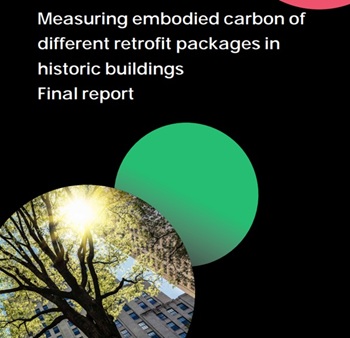
Historic England publishes research into embodied carbon when retrofitting traditional buildings.

New Prime Minister delivers on ECA call for cut in electricity costs.

CIOB reacts to the announcement of Andy Burnham as Prime Minister.

Heritage and conservation science workforce survey - Have your say.
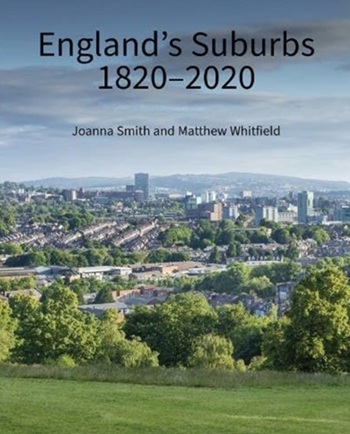
England's Suburbs 1820-2020. Book review.

New, more proportionate and targeted approach for higher-risk building assessments.

Government brings British Steel into public ownership.

UKCW Birmingham returns with bold new theme and focus.
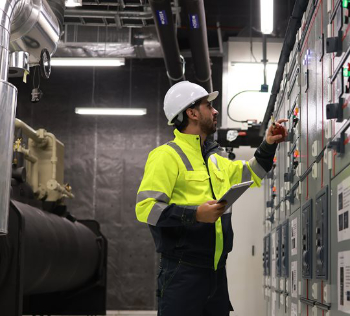
New guidance published on competence requirements for self-certification schemes.
Construction Management, 8 July

NEETs crisis drives interest in trades, but apprenticeships barriers remain.
Passive fire protection webinar
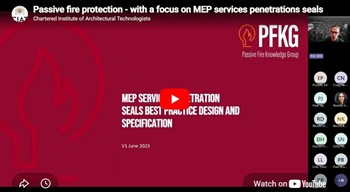
MEP services penetration seals.

Where its at podcast (and video) - The role of the Architectural Technologist as an Expert Witness.